
Protecting Your Feet at Home Before Winter Hits
Diabetic feet need extra care all year, but Michigan winters add even more stress. Cold air can dry out skin, tight boots can rub, and poor circulation can make small problems turn into serious wounds. When you live with diabetes, a tiny sore on your foot can be much more than “just a blister.”
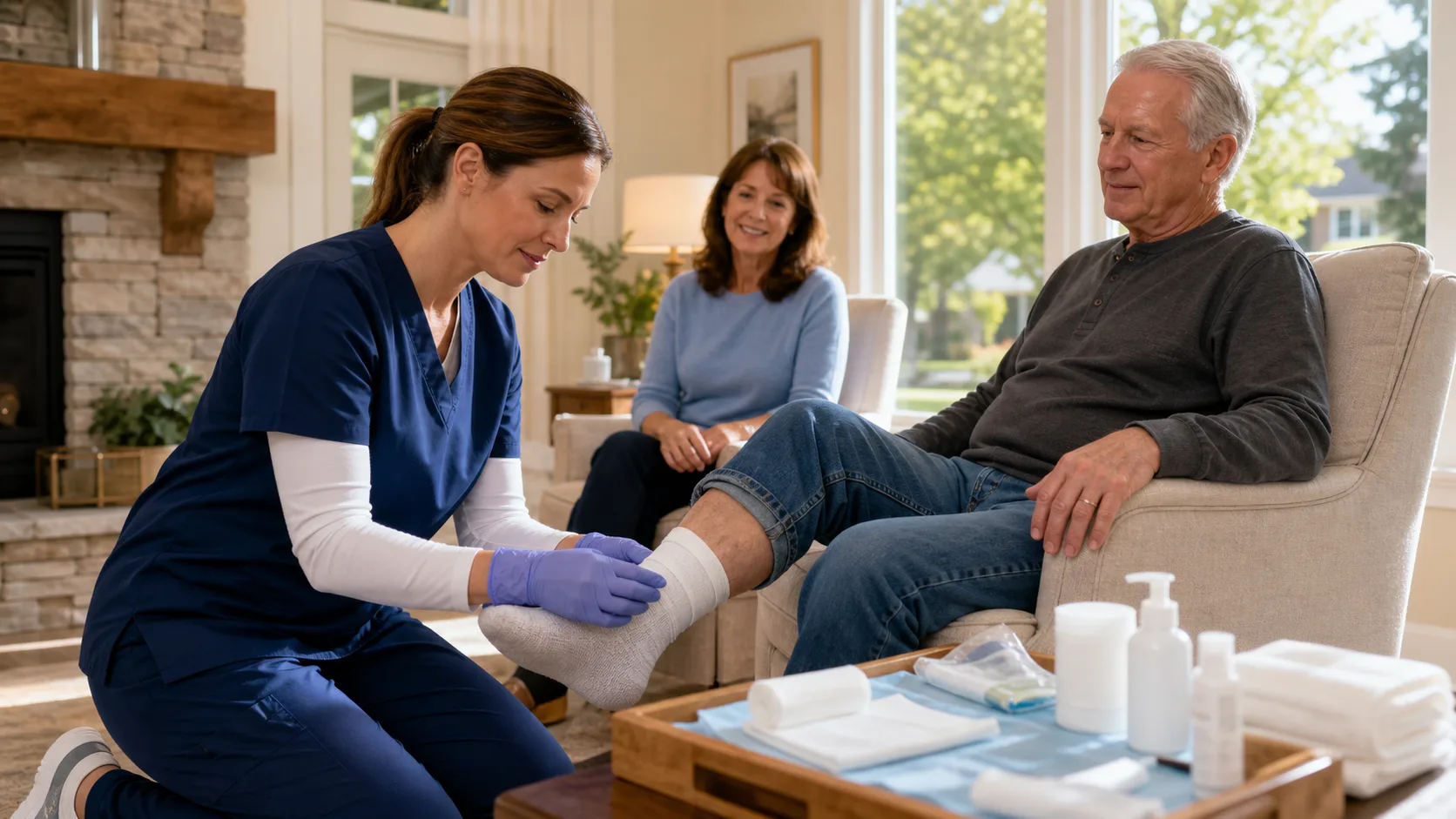
For people across Michigan, diabetic foot ulcer treatment is no longer limited to big hospitals or crowded clinics. Physician-led advanced wound care can now come right to your home or the bedside in many care facilities. That means you can get hospital-grade care without dealing with icy roads, long drives, or long waits.
In this article, we will walk through what that care looks like. We will talk about why fast attention matters, what happens during a home visit, how mobile wound care works in local communities, and simple steps you can take to help protect your feet before the snow piles up again.
Why Diabetic Foot Ulcers Need Fast, Expert Care
A diabetic foot ulcer is an open sore or wound on the foot that does not heal in a normal way. High blood sugar can damage nerves so you feel less pain, and it can also affect blood vessels so your feet get less blood flow. When that happens, a small cut, blister, or callus can turn into a slow-healing sore.
Delaying care can lead to serious problems, such as:
- Infection in the skin or deeper tissue
- Hospital stays for IV antibiotics or surgery
- Bone infection, also called osteomyelitis
- Risk of amputation when infection cannot be controlled
In Michigan, icy sidewalks, wet socks, and heavy boots can all make things worse. Feet can stay damp and cold, which can damage skin and increase the chance of infection. When you add nerve damage and poor circulation, waiting “to see if it gets better” is not a safe plan.
This is where specialized wound care physicians come in. They are trained to:
- Remove dead or infected tissue using careful debridement techniques
- Choose and apply advanced dressings that support healing
- Watch for signs of infection and adjust treatment quickly
- Create care plans that fit your overall health, blood sugar control, and daily routine
Having that level of skill at the bedside, in your own room, can make a big difference in how your foot heals and how you feel day to day.
What Diabetic Foot Ulcer Treatment in Michigan Homes Includes
A first home-based visit for a diabetic foot ulcer is usually very detailed. The goal is to understand your whole health picture, not only the wound. During that visit, a physician may:
- Take a complete medical history, including past wounds and surgeries
- Check circulation in your legs and feet and test how well you feel touch or temperature
- Measure and photograph the ulcer so progress can be tracked over time
- Review your medications, including blood sugar medicines and blood thinners
- Talk about your blood sugar control and daily habits that affect healing
Once the physician understands the wound and your health, they can bring hospital-grade treatments right to your bedside. These can include:
- Sharp debridement with sterile tools to remove dead tissue and help new tissue grow
- Specialized dressings that manage moisture and protect the wound surface
- Negative pressure wound therapy when appropriate to support healing
- Assessment for offloading devices, such as special boots or inserts, to take pressure off the sore
Home-based diabetic foot ulcer treatment in Michigan does not replace your regular doctors. Instead, it fits in with them. A mobile wound care team can:
- Coordinate needed labs or imaging through your existing providers
- Share updates with your primary care provider and podiatrist
- Suggest changes to medications when needed, through the proper prescribers
- Work with your diabetes care team to support better blood sugar control
This kind of teamwork keeps everyone on the same page and helps prevent gaps in care.
How Mobile Wound Care Works in Michigan Communities
Mobile wound care is designed for people who cannot easily travel or who live in settings where on-site care is safer and more practical. In many Michigan communities, that includes:
- Patients living at home who have trouble walking or driving
- Residents in assisted living communities
- Residents in skilled nursing or long-term care facilities
A physician-led wound care team comes to you on a recurring schedule. Visits are set up based on how serious the wound is and how often dressings need to be changed. Instead of arranging transportation, facing snowy roads, and sitting in waiting rooms, you receive care where you are.
Benefits for Michigan patients and families often include:
- Less travel time in rain, ice, and snow
- Fewer missed visits due to weather or transportation problems
- Care in a familiar setting, which can help reduce stress
- Consistent follow-up, so changes in the wound are caught early
Families, facility staff, or other clinicians can usually help start the referral process. During early conversations, the team will review:
- Who qualifies for mobile care based on medical needs and mobility
- How scheduling will work around your routine and facility rules
- How insurance, authorizations, and paperwork will be handled
- How communication will flow between the wound care team and facility staff
Knowing what to expect can help everyone feel more comfortable when the first visit takes place.
Seasonal Foot Protection Tips for Michigan Patients
Good treatment is important, but so is daily prevention, especially as Michigan weather turns colder and wetter. Some simple, practical steps can lower the chance of new ulcers forming:
- Choose winter boots that fit well, have room for socks, and do not rub hot spots
- Wear moisture-wicking socks and change them if they become damp
- Check both feet every day for redness, blisters, cracks, or cuts
- Dry feet gently after showers, especially between the toes
- Warm feet slowly with dry socks and blankets, not with hot water bottles or heaters
Blood sugar management plays a big part in how well wounds heal and how likely they are to form. When blood sugar runs high often, your body has a harder time fighting infection and growing healthy tissue. Even small issues such as corns, calluses, or a patch of redness can turn into an ulcer more quickly in cold, dry months.
You should seek medical help right away if:
- A sore, blister, or cut does not start to look better in a few days
- You notice new redness, warmth, swelling, or drainage around a wound
- There is a bad odor, black tissue, or sudden increase in pain
- You have new numbness, burning, or tingling in your feet
Catching problems early is always safer than waiting for them to “work themselves out.”
Take the Next Step Toward Safer Feet at Home
Being proactive is one of the strongest tools you have. When you live with diabetes in Michigan, protecting your feet is not a small detail. It is part of protecting your independence, comfort, and health. Acting quickly when a sore appears, and not brushing off changes in your feet, can help you avoid ER visits, surgeries, or long hospital stays.
At Niva Health Wound Care, we focus on bringing physician-led, mobile advanced wound care directly into homes and care facilities. Our goal is to provide hospital-grade diabetic foot ulcer treatment in Michigan at the bedside, so patients and families can worry less about winter roads and focus more on healing and daily life.
Protect Your Feet With Advanced, Personalized Care Today
If you are living with diabetes and starting to see changes in your feet, we encourage you to explore our specialized diabetic foot ulcer treatment in Michigan before a small issue becomes a serious complication. At Niva Health Wound Care, we focus on early intervention, tailored treatment plans, and education so you can stay active and avoid preventable hospital visits. To schedule a visit or ask questions about your symptoms, please contact us and our team will help you take the next step in protecting your health.