
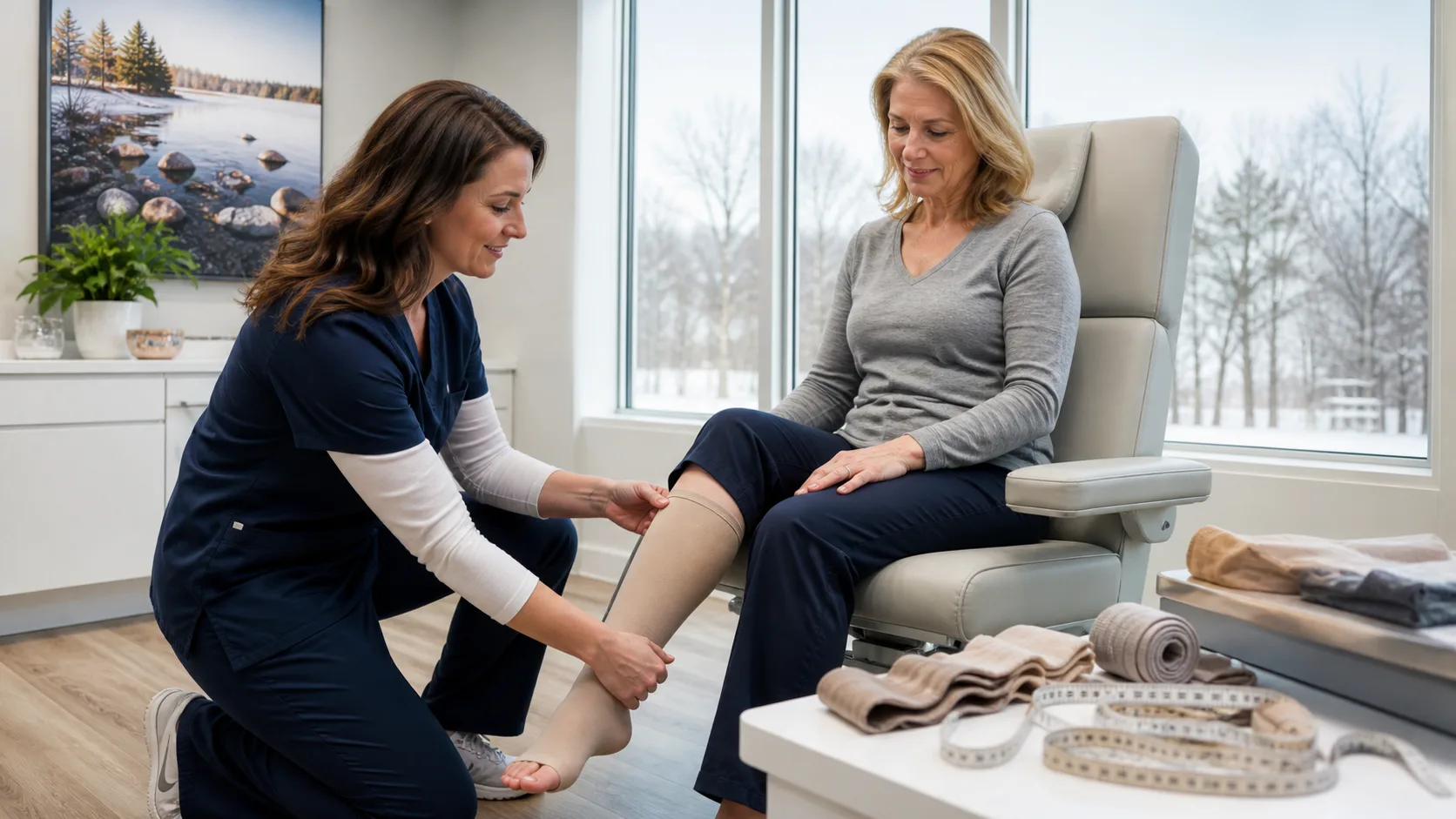
Avoid Setbacks and Speed Healing with Smarter Compression Care
Compression therapy can be a powerful tool for people living with chronic leg swelling or wounds on the lower legs and feet. When it is used correctly, it supports circulation, helps move fluid out of the tissues, and can help wounds heal faster. It is often part of care for people with venous disease, lymphedema, or diabetic ulcers.
When compression is used the wrong way, it can do the opposite of what we want. It can slow healing, irritate the skin, and make it harder to walk or sleep. In a place like Michigan, where we see humid summers, cold winters, and a lot of changes in between, legs and skin can react quickly to temperature and moisture shifts. That makes smart, safe compression even more important.
Our team works with patients where they live and receive care, bringing advanced wound care into homes and facilities. We see the same compression therapy mistakes again and again, and we want to help you avoid them.
Choosing the Wrong Compression Level for Your Legs
Not all compression is the same. Stockings, wraps, and other garments come in different pressure levels, from mild to extra firm. Picking a product because it is on the shelf, or because a friend uses it, can cause real problems.
Common issues include:
- Compression that is too tight, which can limit blood flow to the feet
- Compression that is too loose, which does not control swelling
- Using a style that does not match the shape of the leg or the type of wound
Some people pick up over-the-counter stockings without talking with a provider first. For certain health problems, like poor blood flow in the arteries, nerve damage, or heart issues, this can be unsafe. What feels like “more support” can actually put more stress on already fragile tissue.
A trained wound care, specialist takes time to:
- Look at circulation in both legs
- Review the wound location and type
- Talk through your other health conditions and medications
From there, a plan for compression therapy in Michigan can be built around your body and your daily life. As time goes on, your needs can change. Swelling may lessen, your activity may increase, or a wound may shrink. A mobile team can check the fit on-site, see how your leg responds over days and weeks, and adjust the compression level or style when needed.
Applying Compression Incorrectly at Home
Even the best compression product will not work if it is applied the wrong way. We see many common wrapping errors, especially when people are trying to manage on their own or when staff are short on training.
Frequent mistakes include:
- Uneven pressure from foot to knee
- Folds or wrinkles in bandages that dig into the skin
- Wraps that roll down at the top or bunch at the ankle
- Bands pulled too tight near the toes or calf
These problems can cause new pain, sores from pressure, blisters, or swelling that builds above or below the wrap. When that happens, people often give up on compression because it feels like it is “making things worse.”
Hands-on teaching from a wound care professional makes a big difference. You should know:
- How to place your leg and foot while putting wraps on
- How snug the wrap should feel, and when it is too tight
- When a donning aid, like a special device or glove, might help
When care teams come to the home or facility, they see the real-world challenges that get in the way. They can correct mistakes in the moment and also walk family members or staff through each step, so compression is safe between visits too.
Ignoring Skin Changes Under Compression Wraps
When skin is covered by layers of dressing and compression, it needs extra attention. In Michigan, dry winter air can make skin flaky and fragile, while warm, sticky days can lead to sweating under wraps. Both extremes can trigger irritation if they are not managed well.
Warning signs you should not ignore include:
- Redness that does not fade after the wrap comes off
- New blisters, cracks, or open spots
- Areas that feel hot, firm, or much more tender
- Numbness or tingling in the toes
- Drainage that soaks through more than usual
A simple, steady skin care routine can help protect your legs. This often means gentle washing, patting the skin dry, and using moisturizers that do not break down bandage adhesives. High-friction spots, like the shin or ankle, may need extra protection with soft dressings.
When wound care teams visit often, they can inspect the skin at each change. They can switch to more breathable materials, adjust how often wraps are changed, or layer dressings in a different way so fragile skin is protected while compression still does its job.
Wearing Compression Inconsistently or at the Wrong Times
Compression therapy works best when it is steady and consistent. Putting it on only “when it hurts” lets the leg swell up and settle down over and over. That stretching and shrinking can stress the skin and slow down wound healing.
People also run into timing issues, such as:
- Wearing compression overnight when it was not prescribed
- Taking it off too early in the day, so fluid builds up again
- Keeping the same routine on days with extra standing, walking, or travel
In Michigan, routines can change with the season. Some people are on their feet more in the fall, or spend long stretches sitting indoors in the winter. A good plan for compression therapy in Michigan takes all of this into account. It should feel realistic for your daily schedule, not like something impossible to follow.
With regular follow-up, providers can check how often you actually wear compression, talk through any barriers, and adjust the plan. Sometimes small changes, like shifting the time you put garments on or using a different style for travel days, can make it much easier to stick with therapy.
Skipping Professional Follow-Up and Relying Only on Self-Monitoring
When swelling looks better and pain calms down, it can be tempting to think, “I’m fine now.” But even when compression seems to be working, things can change quietly under the wraps. Wounds may slow down in their healing, infection risk can shift, and circulation can get better or worse over time.
Self-checks are helpful, but they often miss subtle warning signs like:
- Redness that slowly spreads above the wrap edge
- Skin that is getting firmer, shinier, or more fragile
- Small changes in wound size or depth
- Early pressure damage under a dressing
Regular professional follow-up adds another layer of safety. During visits, a wound care team can measure wounds, look closely at the skin, check pulses and circulation, and decide if the compression strength, type, or schedule needs an update. They can also keep your primary providers updated so your overall care plan stays connected and stable.
At Niva Health Wound Care, we partner with facilities and home-based teams across Michigan and other states to support safer compression therapy. By bringing hospital-grade wound care directly to patients, we help catch problems early, support healing, and reduce the need for urgent hospital visits linked to preventable compression issues.
Take Control Of Your Wound Healing With Targeted Support
If swelling, pain, or slow-healing wounds are affecting your daily life, we can help you address the problem at its source with personalized compression therapy in Michigan. At Niva Health Wound Care, our team evaluates your circulation, wound status, and overall health to tailor a safe, effective treatment plan. To schedule an appointment or ask questions about your options, please contact us today.