
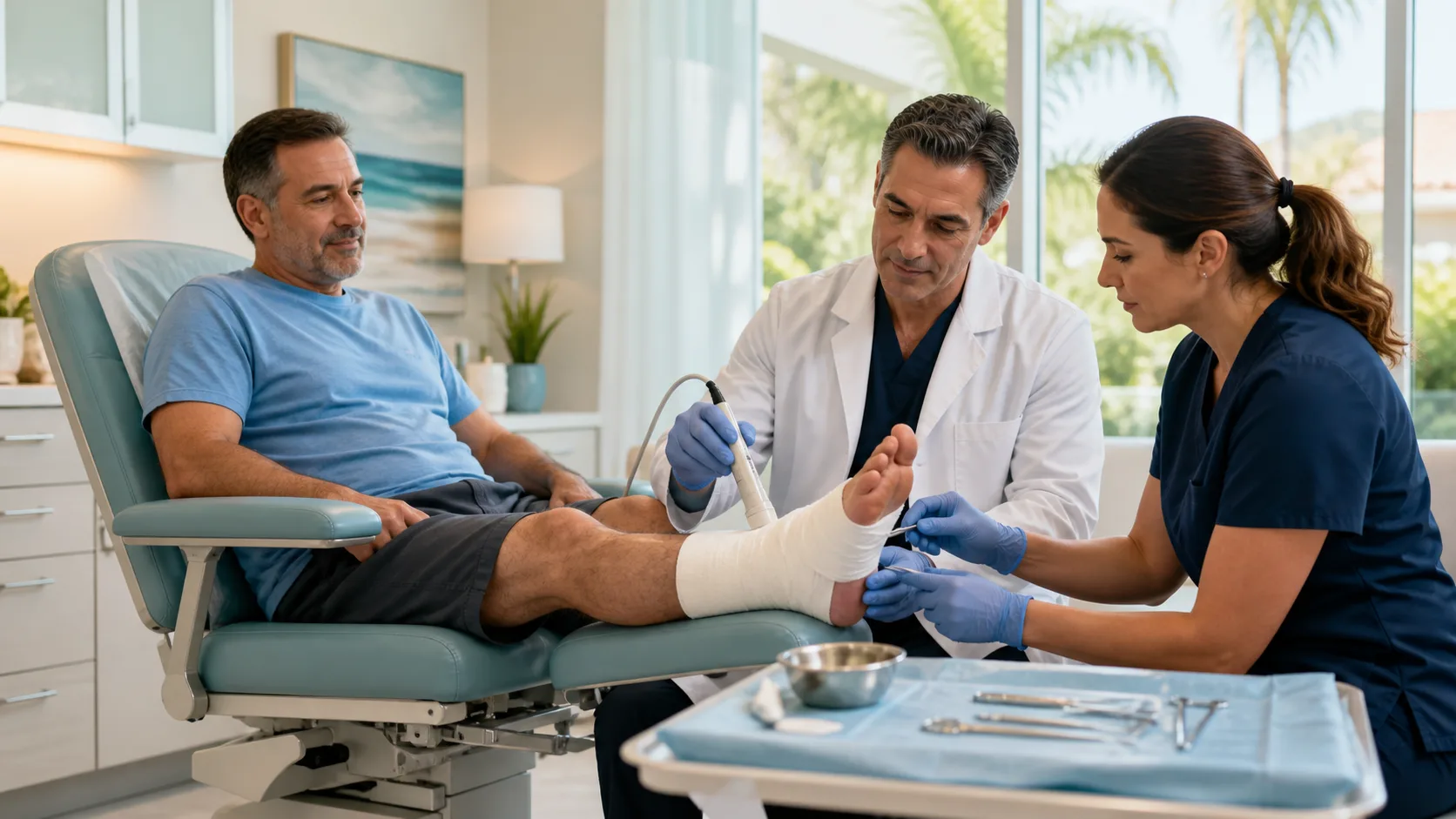
Living with diabetes means paying close attention to your feet, especially in a warm, humid place like Florida. Diabetic foot ulcers can start from something small, like a blister or a callus, and quickly turn into a serious problem if they are not checked by a wound care physician in Florida. Early care can help protect your limbs, lower your risk of infection, and keep you out of the hospital.
In this article, we share how wound care doctors look at diabetic foot ulcers, what warning signs catch our eye, and why Florida’s climate matters more than many people realize. We will also talk about what patients and caregivers can watch for at home so that problems are found early and treated quickly.
Early Warning Signs Wound Doctors Never Ignore
Florida’s warm, humid air keeps feet warm and damp inside shoes almost all year. For someone with diabetes, that mix of heat and moisture can be trouble. Skin breaks down faster, and small sores can get infected more quickly.
When we see a diabetic foot ulcer, we are not just looking at the open sore. We are thinking about how to:
- Protect the limb
- Control infection risk
- Reduce the chance of a hospital stay
- Support healing over time
We look beyond the surface. A wound that seems small on top can hide deeper damage, poor circulation, or nerve problems. By the end of this article, you will know what we look for during an exam and what signs should make you ask a wound care physician in Florida for help.
How Florida’s Climate Affects Diabetic Foot Ulcers
In Florida, heat and humidity are part of daily life. For people with diabetes, that means it affects how feet feel inside shoes and sandals.
Here is how the climate can raise ulcer risk:
- Extra sweating keeps socks and shoes damp
- Moist skin rubs more and breaks down faster
- Warm, moist skin can be a better place for germs to grow
Many people walk more in late summer and fall, when school starts, sports pick up, and travel plans return. All that extra movement can turn a small blister or callus into an open sore, especially when you do not feel pain the same way because of nerve damage.
This is why a wound care physician in Florida will often ask about:
- The types of shoes and socks you wear
- How far you walk each day
- Time spent outdoors on hard or uneven surfaces
- Any recent trips, outings, or changes in routine
Those details help us understand how an ulcer started and what might be slowing it down from healing.
What Wound Care Physicians Look for at First Glance
The first look at a diabetic foot ulcer tells us a lot. We pay close attention to:
- Size and depth of the ulcer
- Color of the wound bed and nearby skin
- Odor, if present
- Type and amount of drainage, such as clear, cloudy, or bloody
If we see bone, tendon, or deep tissue, that is a serious sign that needs quick care. We also watch for red-flag changes around the ulcer, including:
- Spreading redness
- Warmth or swelling
- Tenderness around the area
- Red streaks moving up the foot or leg
These can point to cellulitis or a deeper infection that may need fast medical attention.
We never focus on just one spot. We carefully check both feet, looking at:
- Nails for thickening or ingrown edges
- Calluses under the toes or heel
- Areas where the shoe might rub or squeeze
- Spaces between toes where moisture can collect
This full check helps us catch problems early, even in areas that do not hurt yet.
Hidden Risks Beneath the Skin and Around the Wound
What we see on the surface is only part of the story. We also check circulation to the feet. Poor blood flow can slow healing and make infection risk higher. During an exam, we may look at:
- Pulses on the top of the foot and near the ankle
- Skin temperature, cool or warm spots
- Color changes, such as pale or bluish areas
- Hair loss on the foot or lower leg
Nerve damage, called neuropathy, is another big concern. If you cannot feel pain, you may not notice a blister, cut, or crack until it is already infected. We often use simple tools, such as a thin monofilament or a tuning fork, to test how well you feel touch and vibration in different spots on the foot.
If something suggests a deeper problem, we may order additional tests. These can include:
- Imaging to check for bone infection or hidden pockets of fluid
- Blood work to look for signs of infection or poor control of diabetes
- Vascular studies to see how well blood moves through the arteries
These tests help us find trouble early, before it causes bigger damage.
Building a Complete Picture: Labs, Lifestyle, and Daily Care
To plan good care, we look at more than just the foot. We also review lab results, such as blood sugar and A1C levels. Poorly controlled diabetes can slow down healing and make infections harder to manage.
We ask questions about:
- Medications and how often they are taken
- Eating habits and hydration
- Smoking or vaping, if present
- Daily routines and how feet are cleaned and protected
We also think about where the person lives and who helps them:
- Is the person at home, in assisted living, or another facility?
- Can they stay off the sore area, for example by using special boots or devices?
- Is there a family member or caregiver who can help with dressing changes?
Each of these pieces guides how we set up care so it fits real life and can be followed every day.
How Advanced Mobile Wound Care Speeds Healing
For many patients, getting to a clinic is hard, especially with a painful foot ulcer. That is where advanced mobile wound care comes in. A physician-led team can bring care right to the bedside at home or in a facility.
At a visit, we may use tools such as:
- Sharp debridement to remove dead or infected tissue
- Specialized dressings to manage moisture and protect the area
- Offloading devices to keep pressure off the ulcer
- Care plans that help control infection risk
Having a wound care physician in Florida come to you can support earlier attention to small problems, cut back on trips for transportation, and help keep care steady over time. Mobile teams can also work with primary care, podiatry, and vascular specialists to help protect the foot and lower the chance of amputation.
Take Action Now to Protect Your Feet and Your Future
As we move through the fall season with school events, sports, and holidays, daily foot checks matter more than ever. If you have diabetes or care for someone who does, look at feet every day. Watch for any sore, blister, crack, or change in color that does not start to look better after a day or two.
Some signs mean it is time to talk with a wound care physician in Florida as soon as possible, including:
- Increased pain or a new burning feeling
- More redness, warmth, or swelling around a sore
- Drainage that is thick, yellow, green, or bloody
- A strong or foul odor from the wound
- Fever, chills, or feeling unwell
Timely, physician-led wound care at the bedside can make a real difference in how quickly a diabetic foot ulcer heals and how well the foot is protected over time.
Take The Next Step Toward Better Wound Healing Today
If you or someone you care for is struggling with a complex or nonhealing wound, our team at Niva Health Wound Care is ready to help. A dedicated wound care physician in Florida will work closely with your facility and care team to create a personalized treatment plan focused on long-term healing. We make it simple to get started and coordinate services so you can stay focused on patient comfort and recovery. To discuss your needs or schedule a consultation, please contact us today.