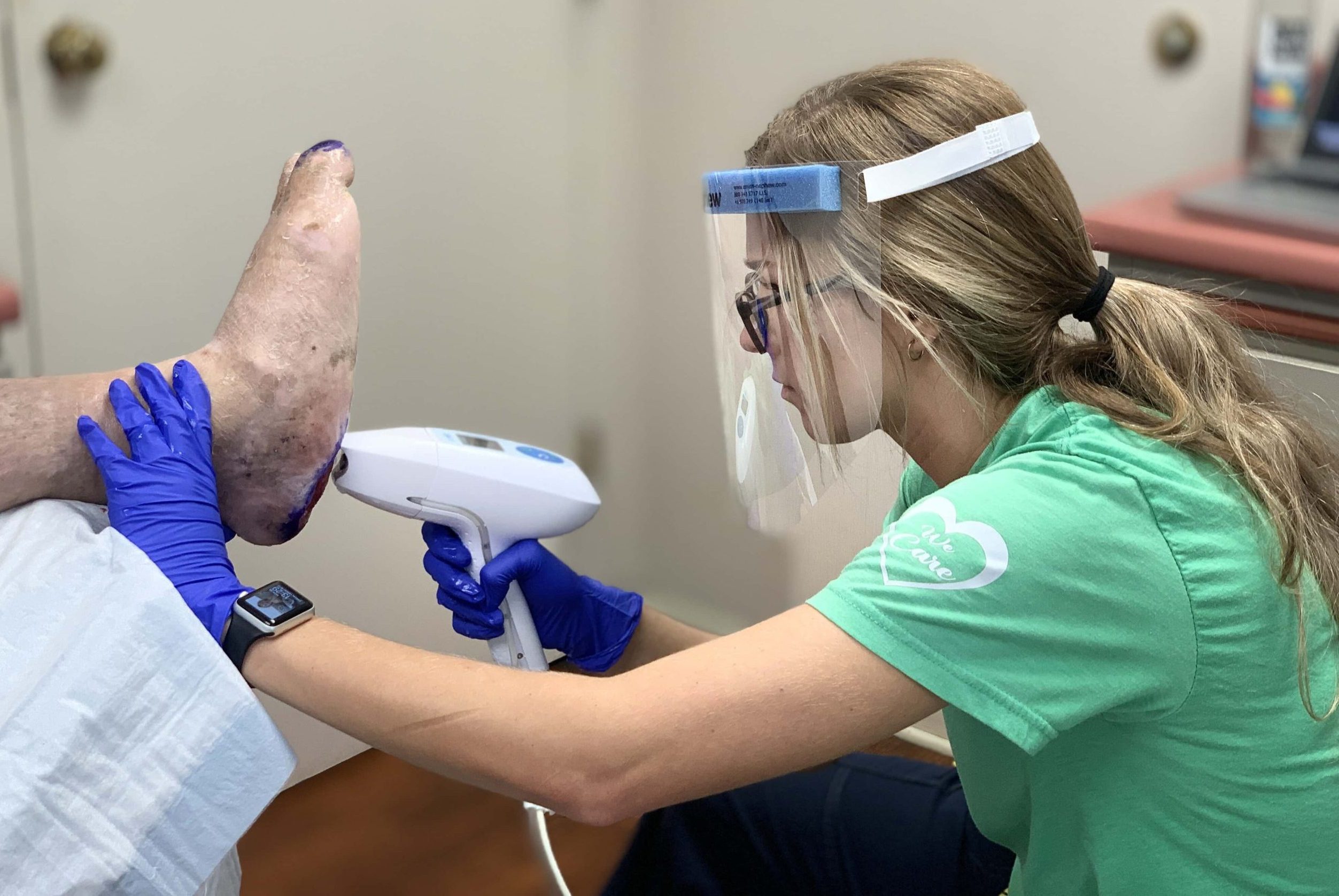
MIST Therapy is an advanced, non-contact ultrasound treatment that accelerates healing in chronic, infected, and non-healing wounds. Using low-frequency, high-intensity ultrasound at 35 kHz — considered the optimal frequency for bioburden control — this therapy stimulates the wound environment without damaging healthy tissue.
It delivers effective debridement and cleansing without the trauma associated with traditional sharp or mechanical methods.
Not all ultrasound devices are the same.
MIST Therapy operates at 35 kHz, a frequency shown to effectively disrupt necrotic tissue and biofilm while preserving healthy granulation tissue
All without direct contact with the wound bed.
This makes it especially valuable for fragile tissue, painful wounds, and patients who cannot tolerate aggressive debridement.
Ultrasound debridement has been shown to reduce wound healing time by up to 50% compared to conventional methods . By removing devitalized tissue while preserving viable tissue, the body can progress through the healing cascade more efficiently.
Infection Control
Chronic wounds often stall due to biofilm and bacterial burden. Clinical trials demonstrate significant reductions in bacterial load across wound types including pressure injuries and diabetic foot ulcers.
Patient Comfort
Compared to sharp debridement, ultrasound therapy is significantly less painful. Studies report up to a 40% reduction in pain scores following ultrasound-based debridement.
Cost Efficiency
Faster healing, fewer aggressive procedures, and reduced complication rates translate into lower overall treatment costs and fewer escalations to surgical intervention.
It plays a critical role in limb salvage, graft preparation, and complex wound stabilization.
Our certified wound care providers deliver scheduled MIST sessions as part of a structured treatment plan tailored to wound type, severity, and patient tolerance.
Treatment frequency is determined by wound complexity and healing response, with measurable progress tracked at every stage.
For skilled nursing and assisted living partners, MIST Therapy supports:
This is not just advanced technology. It is a performance tool that strengthens clinical outcomes across the post-acute continuum.