
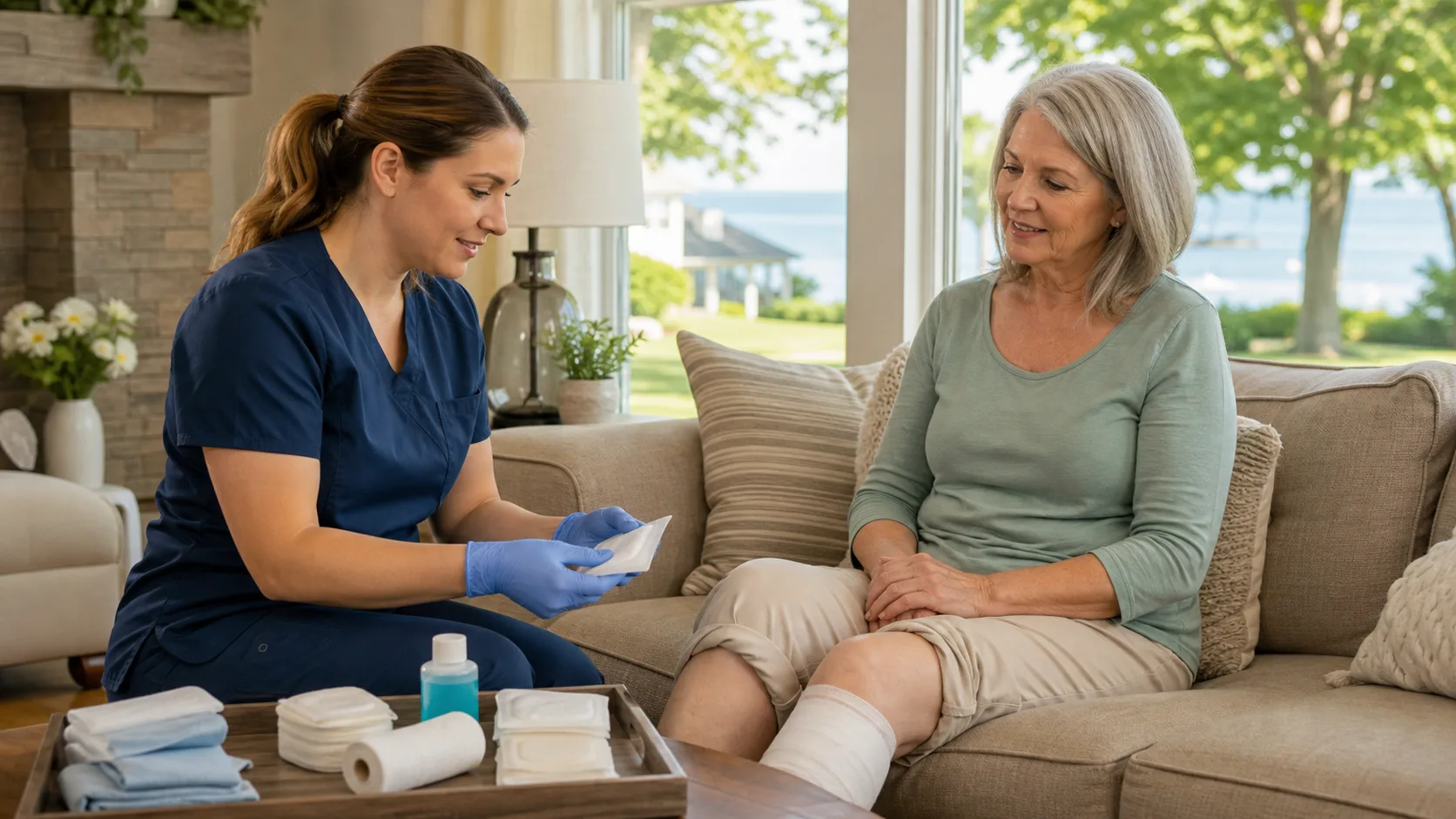
Safely Healing at Home After Surgery in Michigan
Healing from surgery at home can feel stressful, especially when you are worried about infection or the incision opening. The first month after surgery is when most problems start, so what you do each day really matters for how well the wound heals. A clear, simple routine can lower your risk of surgical wound complications in Michigan, even as the weather cools and germs spread more easily.
We want you and your family to feel confident, not scared. That is why we like a step-by-step plan, focused on basic hygiene, clean dressing changes, safe movement, watching for warning signs, and knowing when it is time to bring in home health or a wound specialist. When each part is handled with care, your body has a better chance to do what it is designed to do, which is heal.
Setting up a Clean Home Care Routine
Before you touch your incision, set up a “wound-safe” space. Pick a clean, well-lit spot, like a bathroom counter or a small table by a bright window. Wipe hard surfaces with a regular household cleaner, then lay out only the supplies you need so the area does not get cluttered. During dressing changes, keep pets in another room and ask young children not to touch your supplies.
Good hand hygiene is just as important as the actual bandage. Follow these steps:
- Wash hands with soap and warm water for at least 20 seconds
- Clean between fingers, under nails, and around thumbs
- Dry with a clean towel or disposable paper towel
- Use an alcohol-based sanitizer if soap and water are not close by
Showers are usually safer than baths, because soaking can soften the incision and make it easier to reopen. Ask your surgeon when you can shower and how to keep the wound dry, such as using a plastic cover. Avoid hot tubs, pools, and long baths unless your surgeon clearly says they are safe.
In Michigan, fall and winter bring heavier clothing, dry indoor air, and sometimes more sweating under layers. To protect the wound:
- Avoid tight waistbands or rough seams rubbing over the incision
- Choose soft, loose clothing that does not stick to the dressing
- Change damp clothes quickly if you sweat
- Watch the skin near the bandage for dryness or cracking as the heat comes on
Dressing Changes and Skin Care Made Simple
Your surgeon’s instructions should always be your main guide. Follow their plan for how often to change the dressing and which products to use. It might be tempting to try household items, ointments, or creams that you already own, but putting the wrong thing on a fresh incision can slow healing or cause irritation.
A basic dressing change usually looks like this:
- Wash or sanitize your hands and set up clean supplies
- Gently remove the old dressing, peeling slowly so you do not pull on the skin
- Look at the wound and the old bandage for drainage, color, or odor
- Clean the area only with the solution or method your care team approved
- Protect the skin around the incision if it is getting red or sticky from tape
- Place the new dressing so it covers the wound fully, then secure it without pulling too tight
If the dressing keeps getting wet from drainage, slips out of place, or leaves your skin itchy and red, do not ignore it. You can:
- Call your surgeon’s office to ask if you should change more often
- Ask if a home health nurse visit would help with technique or supply choices
- Ask whether you should be seen by a wound care specialist if the wound looks worse instead of better
When basic dressings are not enough, specialized wound teams can bring in advanced dressings and other therapies to better manage moisture, protect fragile skin, and help the tissue clear away dead material.
Knowing Your Limits with Activity, Rest, and Pain
How you move every day affects your incision. Even normal habits like getting out of bed or lifting laundry can strain the wound. In general, try to avoid heavy lifting, deep bending, twisting at the waist, or stretching across the incision. Move slowly, keep your core steady, and use your arms or a sturdy chair to help push up when standing.
Getting enough rest is important, but total bed rest is usually not the goal. Short, frequent walks in your home or hallway can support blood flow, help your lungs work well, and lower the chance of blood clots. Take stairs one step at a time and use the handrail. Stop and rest if your incision feels like it is pulling or burning.
Pain is your body’s warning system. Mild soreness or a dull ache is common. Pain that keeps getting sharper, throbbing, or spreading around the wound can be a sign of trouble. Use your pain medicine exactly as directed and keep a simple log that notes:
- Pain level at rest and during movement
- Times you take medicine and how well it works
- New pain that appears suddenly or feels different than before
Rising pain at the incision, especially with redness or drainage, is a reason to call for medical guidance.
Red-Flag Symptoms and When to Escalate Care
Some changes around a fresh incision are expected. Mild swelling, light bruising, and small amounts of clear or slightly pink drainage can be normal early on. Over time, you should see less drainage, less swelling, and a calmer, more comfortable incision.
Call for help if you see:
- Redness spreading away from the cut
- Thick yellow, green, or cloudy drainage
- Foul or strong odor from the wound
- The incision edges pulling apart or gapping
Your whole body can also show signs of infection. Watch for fever or chills, nausea, vomiting, sudden tiredness, or feeling “off” in a way that is hard to describe. People with diabetes should watch for higher than usual blood sugar, and family members of older adults should notice if there is new confusion or unusual sleepiness. In colder months in Michigan, when other infections are passing around, these signs can pick up speed.
Who should you call?
- Your surgeon’s office for new or worsening wound changes, pain, or questions about the care plan
- A home health agency if you cannot manage dressing changes, mobility is tough, or you have several medical issues at once
- A wound care specialist if the wound is not healing, keeps getting infected, or looks deep or complicated
Getting the right level of care early can lower the risk of serious surgical wound complications in Michigan.
When Home Care Is Not Enough: Home Health vs. Wound Specialist
Home health nursing helps when you have a clear plan from your surgeon but need support to carry it out. This can be a good fit if:
- You or your caregiver feel unsure about dressing changes
- You have trouble walking or standing at the sink to clean the wound
- You are juggling many medicines or health problems
- You live alone and do not have regular help
A wound specialist may be the next step when the problem is more complex. You may need this level of care if the wound:
- Does not improve after one to two weeks of regular care
- Is deep, has tunnels, or looks like it is breaking down
- Keeps getting infected even after treatment
- Is linked to diabetes, poor blood flow, or a surgical site that reopened
At Niva Health Wound Care, we focus on advanced treatment for these difficult wounds. Our team can use methods like debridement, MIST therapy, compression, and advanced dressings. We provide mobile and facility-based care, bringing hospital-grade wound treatment to patients at home or in long-term care and working with your surgeon and primary care provider to support safer recovery and help prevent hospital readmissions related to surgical wound complications in Michigan.
Your Personalized Action Plan for a Safer Recovery
A simple written plan can make daily care much easier for you and anyone helping you. Many people like to keep a notebook or chart that includes:
- Handwashing and hygiene steps
- Times for dressing changes and pain medicine
- Short walking goals for each day
- Notes about drainage, redness, odor, or temperature
- Questions to ask at the next medical visit
As fall and winter arrive in Michigan, think ahead about things like icy driveways, early sunsets, and staying supplied. Arrange transportation for follow-up visits before the weather turns bad. Make sure hallways and stairs are well-lit and clear of clutter, so you are less likely to trip or bump the incision. Keep enough wound care supplies on hand so you are not forced to skip a dressing change during a storm or illness.
If you feel unsure about how your surgical wound is healing, if something suddenly changes, or if you already have a complication that is not getting better, a specialized wound team like Niva Health Wound Care can support you and your other providers with focused, hospital-grade care where you live.
Protect Your Recovery With Expert Surgical Wound Care
If you are worried about surgical wound complications in Michigan, we are here to help you heal safely and confidently. At Niva Health Wound Care, we carefully assess your incision, identify early signs of problems, and create a personalized treatment plan to support a smooth recovery. Our team is ready to answer your questions and coordinate timely care so small issues do not become serious setbacks. To schedule a visit or talk with our staff, please contact us today.